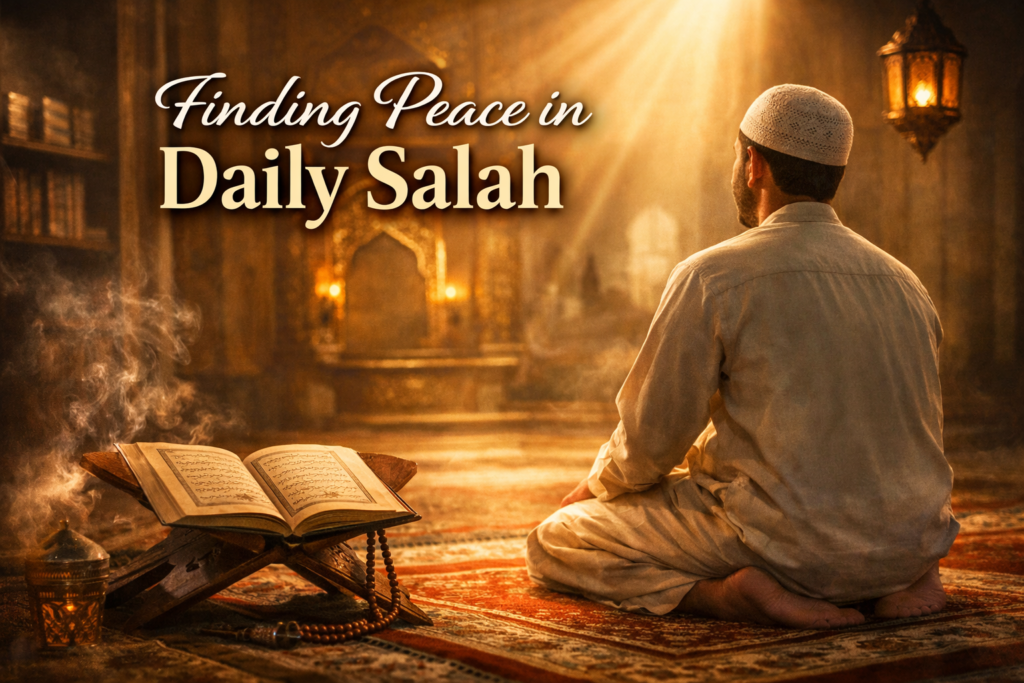
Finding Peace in Daily Salah: A Personal Journey Toward Inner Calm and Spiritual Balance
Introduction: Why Modern Hearts Feel Restless
I live in a world that never stops moving. Notifications arrive faster than my thoughts. Responsibilities stack endlessly. Even when I rest, my mind keeps running. Many people around me feel the same quiet exhaustion a constant search for peace that never fully arrives.
Yet Islam introduced a solution long before modern stress existed: Salah.
Finding Peace in Daily Salah is not simply about performing a ritual five times a day. It is about pausing life, realigning the soul, and reconnecting with Allah in a deeply personal way. Over time, I realized that prayer is not an interruption to life it is the anchor that keeps life stable.
Allah says:
“Indeed, in the remembrance of Allah do hearts find rest.”
(Qur’an 13:28)
This verse captures the essence of what many people seek today: inner calm that survives external chaos.
What Does “Finding Peace in Daily Salah” Really Mean?
Finding Peace in Daily Salah means reaching a state where prayer becomes emotional relief instead of obligation. It is when the moment I raise my hands for takbir, my worries begin to lose weight.
Peace in Salah includes:
Emotional calm
Mental clarity
Spiritual connection
Trust in Allah’s plan
A sense of grounding
It does not mean perfection. Even distracted prayers can slowly train the heart toward tranquility if I remain consistent.
The Spiritual Psychology Behind Salah
Modern psychology talks about mindfulness, grounding, and intentional breathing. Salah naturally combines all three.
When I pray:
I disconnect from distractions.
I move my body in intentional patterns.
I recite meaningful words aloud or silently.
I focus on a higher purpose.
These actions calm the nervous system. They slow racing thoughts. They create rhythm and stability.
From an Islamic perspective, Salah aligns body, mind, and soul toward one center — Allah.
Qur’anic Foundations of Peace in Prayer
The Qur’an repeatedly connects prayer with success and emotional balance.
1. Prayer Prevents Inner Chaos
“Indeed, prayer prohibits immorality and wrongdoing.”
(Qur’an 29:45)
When I pray regularly, my actions become more intentional. This reduces regret and anxiety.
2. Prayer as a Source of Strength
“Seek help through patience and prayer.”
(Qur’an 2:45)
This verse shows that Salah is not only worship — it is support during hardship.
3. True Believers and Humble Prayer
“Successful indeed are the believers, those who are humble in their prayers.”
(Qur’an 23:1–2)
Humility creates calm because it removes ego and pressure.
Prophetic Teachings About Calm Through Salah
The Prophet Muhammad ﷺ treated prayer as emotional relief, not a burden.
He said:
“O Bilal, give us comfort through it (the prayer).”
(Sunan Abi Dawud, Hadith 4985)
This statement is powerful. Prayer was his comfort.
Another narration explains:
“The closest a servant is to his Lord is while he is in prostration.”
(Sahih Muslim, Hadith 482)
This closeness explains why sujood often feels deeply peaceful.
Why Many People Don’t Feel Peace in Salah (And How to Fix It)
Many struggle with finding peace in daily Salah because of common barriers:
1. Rushing Through Prayer
When I rush, my mind stays busy.
2. Mental Distractions
Phones and unfinished tasks follow me into prayer.
3. Lack of Understanding
Reciting words without knowing their meaning weakens connection.
4. Treating Salah as a Checklist
Peace grows when intention replaces routine.
The solution starts with slowing down and reconnecting with meaning.
Preparing the Heart Before Prayer
Peace begins before the first takbir.
I find that simple habits help:
Making wudu slowly and consciously
Leaving distractions behind
Taking a few deep breaths
Reminding myself that this is a meeting with Allah
The Prophet ﷺ said:
“When one of you stands for prayer, he is conversing with his Lord.”
(Sahih al-Bukhari, Hadith 405)
When I remember this, my mindset shifts instantly.
Mindfulness and Presence During Salah
Mindfulness is not a new concept; Islam has practiced it for centuries through khushu’ — focused humility.
Ways I increase focus:
Understanding Surah Al-Fatihah deeply
Pausing slightly between verses
Visualizing standing before Allah
Slowing movements intentionally
Finding Peace in Daily Salah becomes easier when each movement carries awareness.
The Power of Sujood: Where Peace Deepens
Sujood is unique. It places the highest part of my body — the forehead — on the ground.
This act teaches surrender.
Science suggests that lowering the body and slowing breathing reduces stress. Spiritually, sujood removes pride and brings closeness.
In those moments, worries feel smaller because I remember the greatness of Allah.
Real-Life Transformation Through Daily Salah
Many people notice subtle changes when they commit to prayer:
Anxiety decreases gradually
Decision-making becomes clearer
Patience increases
Emotional reactions soften
I have personally experienced days where Salah felt like a reset button. After prayer, problems still existed — but my heart felt lighter.
That is the quiet miracle of consistency.
Practical Steps for Finding Peace in Daily Salah Every Day
Here are actionable steps that truly help:
1. Learn the Meaning of What You Recite
Understanding words changes everything.
2. Pray on Time
Delayed prayer often feels rushed.
3. Create a Calm Prayer Space
Even a small clean corner helps.
4. Reduce Screen Time Before Salah
Mental noise carries into prayer.
5. Make Personal Dua in Sujood
Speak to Allah honestly.
6. Focus on Quality Over Length
Presence matters more than speed.
Common Mistakes That Steal Khushu’
Thinking about tasks mid-prayer
Moving too quickly
Skipping sunnah prayers constantly
Praying only physically, not emotionally
Awareness of these habits helps me improve gradually.
Long-Term Spiritual Benefits of Consistent Prayer
Finding Peace in Daily Salah is not a one-day experience. It grows over time.
Long-term benefits include:
Stronger faith (iman)
Emotional resilience
Better character
Increased gratitude
Deep trust in Allah
Prayer shapes identity slowly but powerfully.
Final Reflection
Finding Peace in Daily Salah is a journey, not a destination. Some prayers feel deeply spiritual; others feel distracted. Both still matter.
What changed my perspective most was realizing that Allah values effort. Every time I stand to pray, I am choosing peace over chaos, connection over isolation, and hope over worry.
Salah does not remove life’s struggles but it changes how I carry them.
And that alone is a form of peace.
FAQs: Finding Peace in Daily Salah
1. How can I focus better during Salah?
Slow down, understand the words, and remove distractions beforehand.
2. Why don’t I feel anything during prayer?
Peace develops gradually through consistency and intention.
3. Is it normal to get distracted?
Yes. Even sincere believers experience distractions.
4. How long does it take to feel peace in Salah?
It varies, but regular practice brings gradual improvement.
5. Does praying on time increase peace?
Yes, because it reduces rushing and mental pressure.
6. What surahs help improve focus?
Surah Al-Fatihah, Al-Ikhlas, Al-Falaq, and An-Nas are powerful when understood.
7. Can Salah help with anxiety?
Many people experience emotional relief through prayer and remembrance of Allah.
8. Why is sujood so calming?
It combines humility, physical grounding, and spiritual closeness.
9. How can I teach my children peace in Salah?
Model calm, avoid pressure, and explain meanings gently.
10. What if my Salah still feels routine?
Keep showing up. Consistency often comes before emotional connection.
11. Is short prayer acceptable if focused?
Yes. Presence matters more than length.