

Dua After Waking Up: Arabic, Transliteration, and Meaning
The dua after waking up is a short supplication taught by the Prophet Muhammad ﷺ. It begins the day with praise and gratitude to Allah and reminds us of the resurrection and our return to Him.
Dua After Waking Up in Arabic 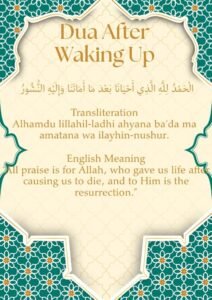
The authentic dua to say after waking from sleep is:
الْحَمْدُ لِلَّهِ الَّذِي أَحْيَانَا بَعْدَ مَا أَمَاتَنَا وَإِلَيْهِ النُّشُورُ
Transliteration
Alhamdu lillahil-ladhi ahyana ba‘da ma amatana wa ilayhin-nushur.
English Meaning
“All praise is for Allah, who gave us life after causing us to die, and to Him is the resurrection.”
This supplication is reported from Hudhayfah ibn al-Yaman رضي الله عنه in Sahih al-Bukhari 6312. The narration also mentions the words the Prophet ﷺ would say before going to sleep.
What Does This Dua Mean?
The supplication contains a simple but meaningful message about life, gratitude, and the Hereafter.
Alhamdu lillah means “all praise belongs to Allah.” Beginning the day with these words acknowledges that waking up is a blessing from Allah.
The phrase ahyana ba‘da ma amatana means “who gave us life after causing us to die.” In the context of this dua, sleep is described in relation to death, while waking is described as being given life again.
The final words, wa ilayhin-nushur, mean “and to Him is the resurrection.” They remind a believer that this life is temporary and that everyone will ultimately return to Allah.
So, although the dua is very short, it connects the beginning of a new day with two important ideas: gratitude for life and remembrance of the Hereafter.
When Should You Say This Dua?
You can say this dua when you wake up from sleep.
The hadith reports that the Prophet ﷺ would say these words when he got up. There is no need to wait until you have completed your morning routine. You can recite it shortly after waking.
For someone learning the dua, it can be helpful to keep the Arabic text beside the bed or review it regularly until the words become familiar.
The most important thing is to understand what you are saying rather than treating the supplication as a collection of words without meaning.
Word-by-Word Meaning
Understanding the individual words can make the dua easier to memorize.
| Arabic | Transliteration | Meaning |
|---|---|---|
| الْحَمْدُ | Alhamdu | All praise |
| لِلَّهِ | lillah | belongs to Allah |
| الَّذِي | alladhi | who |
| أَحْيَانَا | ahyana | gave us life |
| بَعْدَ | ba‘da | after |
| مَا | ma | what / that which |
| أَمَاتَنَا | amatana | caused us to die |
| وَإِلَيْهِ | wa ilayhi | and to Him |
| النُّشُورُ | an-nushur | is the resurrection |
Reading the dua together with its meaning can help you remember both the wording and the message behind it.
How to Memorize the Waking-Up Dua
This dua is short enough to memorize in small sections.
Start with:
Alhamdu lillahil-ladhi
Then learn:
Ahyana ba‘da ma amatana
Finally, add:
Wa ilayhin-nushur
Once you are comfortable with each part, recite the complete dua:
Alhamdu lillahil-ladhi ahyana ba‘da ma amatana wa ilayhin-nushur.
Repeating it when you wake up each day can make the wording easier to remember naturally.
It is also useful to learn the meaning alongside the Arabic. When you understand that you are thanking Allah for giving you another day and remembering the resurrection, the supplication becomes more than something you are simply trying to memorize.
Is This Dua Authentic?
Yes. This waking-up supplication is reported in Sahih al-Bukhari 6312, one of the well-known hadith collections.
The narration is attributed to Hudhayfah ibn al-Yaman رضي الله عنه. It describes the Prophet ﷺ saying a supplication before sleeping and then praising Allah after waking.
The wording of the waking-up dua is:
الْحَمْدُ لِلَّهِ الَّذِي أَحْيَانَا بَعْدَ مَا أَمَاتَنَا وَإِلَيْهِ النُّشُورُ
You can read the narration in Sahih al-Bukhari 6312.
Dua Before Sleeping
The supplication after waking is closely connected with the dua reported for bedtime.
Before going to sleep, the Prophet ﷺ said:
بِاسْمِكَ اللَّهُمَّ أَمُوتُ وَأَحْيَا
Transliteration:
Bismika Allahumma amutu wa ahya.
Meaning:
“In Your name, O Allah, I die and I live.”
The bedtime supplication and the waking-up dua appear together in the narration of Sahih al-Bukhari 6312.
If you want to learn the corresponding bedtime supplication, see our guide to Dua Before Sleeping.
Can You Read It in Transliteration?
Yes, transliteration can be useful when you are still learning Arabic.
However, transliteration is only an approximation of Arabic pronunciation. Some Arabic sounds cannot be represented perfectly using English letters.
For this reason, try to use transliteration as a learning aid while gradually becoming familiar with the Arabic text. Listening to a reliable recitation can also help you improve pronunciation.
If you are new to Arabic, do not feel discouraged if the pronunciation takes time to become comfortable. Learning a short dua gradually is better than rushing through it without understanding the words.
What If You Forget the Dua After Waking?
If you forget the wording, you can learn it again and practice it regularly.
There is no need to become frustrated because you have not memorized it perfectly. Read the Arabic, transliteration, and meaning together, then repeat the supplication whenever you wake up.
With regular practice, the words can become easier to recall.
The purpose of learning this dua is not simply to memorize Arabic. It is also to remember Allah and recognize the blessing of being given another day.
Frequently Asked Questions
What is the authentic dua after waking up?
The authentic supplication reported in Sahih al-Bukhari is:
Alhamdu lillahil-ladhi ahyana ba‘da ma amatana wa ilayhin-nushur.
It means, “All praise is for Allah, who gave us life after causing us to die, and to Him is the resurrection.”
What is the meaning of the waking-up dua?
The dua praises Allah for giving us life after sleep and reminds us that the resurrection and our return are to Him.
Which hadith mentions this dua?
The waking-up supplication is reported in Sahih al-Bukhari 6312 from Hudhayfah رضي الله عنه.
Can I use transliteration to learn the dua?
Yes. Transliteration can help beginners learn the pronunciation, but it should be used alongside the Arabic text because English letters cannot represent every Arabic sound accurately.
Is the dua after waking different from the dua before sleeping?
Yes. The Prophet ﷺ is reported to have said Bismika Allahumma amutu wa ahya before sleeping, while after waking he praised Allah with Alhamdu lillahil-ladhi ahyana ba‘da ma amatana wa ilayhin-nushur.
Does the dua apply when waking from a nap?
The hadith specifically describes the Prophet ﷺ saying it when he got up after sleeping. A person can also remember Allah after waking from a nap, but the primary evidence for this particular wording is the reported practice connected with waking from sleep.
Start Your Day With Remembrance
The dua after waking up takes only a few seconds to recite, yet it carries a meaningful reminder. It teaches us to begin the day by praising Allah, recognizing the blessing of life, and remembering the resurrection.
Learn the Arabic wording gradually, understand its meaning, and try to make it part of your daily remembrance whenever you wake up.
Dua: Alhamdu lillahil-ladhi ahyana ba‘da ma amatana wa ilayhin-nushur.
Meaning: “All praise is for Allah, who gave us life after causing us to die, and to Him is the resurrection.”