
Dua When It Rains: Authentic Supplication for Beneficial Rain
Dua when it rains, Rain is one of Allah’s signs and a reminder of His mercy and power. When rain begins to fall, a Muslim can use that moment to remember Allah and make dua.
There is an authentic supplication for rain that the Prophet ﷺ would say when he saw rain. The dua is short, easy to memorize, and asks Allah to make the rain beneficial. It is reported from Aisha رضي الله عنها in Sahih al-Bukhari 1032.
What Is the Dua When It Rains? 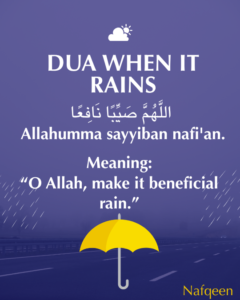
The authentic dua when it rains is:
اللَّهُمَّ صَيِّبًا نَافِعًا
Allahumma sayyiban nafi’an.
Meaning:
“O Allah, make it beneficial rain.”
In Sahih al-Bukhari, Aisha رضي الله عنها reported that whenever the Messenger of Allah ﷺ saw rain, he would say “Sayyiban nafi’an.”
The wording is short, but its meaning is significant. Rather than simply watching the rain fall, the believer asks Allah to make it beneficial and good.
Why Say Dua When It Rains?
Rain is essential for life. It provides water for people, animals, crops, and the land. At the same time, excessive rainfall can sometimes cause difficulties.
The prophetic dua therefore asks Allah for beneficial rain.
The phrase “sayyiban nafi’an” can be understood as asking Allah to make the rain useful and beneficial rather than harmful. The authentic narration specifically connects this supplication with the sight of rain.
It is a simple way to combine gratitude with asking Allah for what is good.
When Should You Say the Rain Dua?
You can say this dua when you see the rain or when it begins to rain.
The narration from Aisha رضي الله عنها says that the Prophet ﷺ would say it when he saw rain.
You don’t need to wait for a particular amount of rainfall or follow a complicated procedure.
Simply noticing the rain can be a reminder to say:
Allahumma sayyiban nafi’an.
Is This Dua Authentic?
Yes. The dua is authentically reported in Sahih al-Bukhari 1032.
The narration is from Aisha رضي الله عنها, who reported that the Prophet ﷺ would say this when he saw rain.
A similar wording is also reported in Sunan an-Nasa’i 1523, where the supplication is recorded as:
اللَّهُمَّ اجْعَلْهُ صَيِّبًا نَافِعًا
Allahummaj’alhu sayyiban nafi’an.
Meaning:
“O Allah, make it beneficial rain.”
For this article, the concise wording Allahumma sayyiban nafi’an is directly supported by the Sahih al-Bukhari narration.
A Simple Way to Remember It Dua when it rains
The dua is only three words in Arabic:
Allahumma — O Allah
Sayyiban — beneficial rain
Nafi’an — beneficial/useful
You can memorize the complete phrase:
Allahumma sayyiban nafi’an.
Then whenever you notice rain, use that moment to remember Allah and ask Him to make it beneficial.
Dua After the Rain (Dua when it rains)
There is also an authentic dhikr to say after the rain has fallen. The Prophet ﷺ would say:
مُطِرْنَا بِفَضْلِ اللَّهِ وَرَحْمَتِهِ
Muṭirnā bifaḍlillāhi wa raḥmatih.
Meaning:
“We have been given rain by the grace and mercy of Allah.”
This wording is reported in Sahih al-Bukhari and Sahih Muslim.
This supplication reminds a believer that rainfall is ultimately from Allah’s grace and mercy. It is therefore a beautiful way to express gratitude after experiencing rain.
Before and After Rain: Easy to Remember
You can remember these two short phrases together:
When you see rain:
اللَّهُمَّ صَيِّبًا نَافِعًا
Allahumma sayyiban nafi’an
“O Allah, make it beneficial rain.”
After the rain:
مُطِرْنَا بِفَضْلِ اللَّهِ وَرَحْمَتِهِ
Muṭirnā bifaḍlillāhi wa raḥmatih
“We have been given rain by the grace and mercy of Allah.”
The first is reported in Sahih al-Bukhari, while the second is reported in both Bukhari and Muslim.
Can You Make Personal Dua While It Is Raining? (Dua when it rains)
Yes. You can make your own permissible dua to Allah while it is raining.
For example, you may ask Allah for:
- forgiveness for your sins
- guidance and steadfastness
- good health and well-being
- halal provision
- protection from harm
- blessings for your family
- success in beneficial matters
- relief from difficulties
- mercy for yourself and your loved ones
There is also a reported hadith concerning dua at the time of rainfall. Scholars have discussed its grading, but some hadith scholars have considered the report authentic.
Therefore, rain can be used as a meaningful opportunity to turn to Allah in dua. However, it is important not to claim that every particular personal dua made during rain is guaranteed to be accepted in a specific way or at a specific time.
What If the Rain Becomes Too Heavy?
Islam also contains a supplication for a situation where rain becomes excessive and begins causing difficulty.
The Prophet ﷺ prayed:
اللَّهُمَّ حَوَالَيْنَا وَلَا عَلَيْنَا
Allahumma ḥawālaynā wa lā ʿalaynā.
Meaning:
“O Allah, around us and not upon us.”
The longer supplication asks Allah to direct the rain toward hills, valleys, pastures, and places where it would be beneficial rather than causing harm. This wording is reported in both Sahih al-Bukhari and Sahih Muslim.
This is an important reminder that Islam does not simply teach Muslims to ask for more rain. The believer asks Allah for beneficial rain and for protection when rainfall becomes harmful.
Is There a Special Dua for Every Type of Rain?
The authentic Sunnah gives us specific supplications connected with rain, but Muslims should be careful about attributing additional phrases to the Prophet ﷺ without reliable evidence.
The well-established short dua when seeing rain is:
Allahumma sayyiban nafi’an.
Sahih al-Bukhari records this wording from Aisha رضي الله عنها.
Another authentic narration in Sunan an-Nasa’i records:
اللَّهُمَّ اجْعَلْهُ صَيِّبًا نَافِعًا
Allahummaj’alhu sayyiban nafi’an.
Meaning:
“O Allah, make it beneficial rain.”
Both narrations convey the same essential request: that Allah make the rain beneficial.
A Simple Sunnah Routine When It Rains
You do not need a complicated routine. A simple approach is enough.
When you see the rain, say:
Allahumma sayyiban nafi’an.
Then you can make any personal dua that asks Allah for something good.
After the rain, remember Allah’s favor by saying:
Muṭirnā bifaḍlillāhi wa raḥmatih.
And if rainfall becomes excessive or harmful, you can ask Allah to redirect it:
Allahumma ḥawālaynā wa lā ʿalaynā.
These supplications come from different prophetic narrations concerning rain and its effects.
If you are building a collection of authentic daily duas, this article can naturally link to your existing guide on the dua for entering and leaving home, especially in a section discussing everyday moments when a Muslim remembers Allah.
What the Dua for Rain Teaches Us
The short phrase Allahumma sayyiban nafi’an carries an important lesson.
Rain itself is not automatically described simply as good or bad. What matters is asking Allah to make it beneficial.
A farmer may need rain for crops. A community may need it for water. At another time, excessive rainfall can damage homes, roads, or fields.
The Sunnah therefore teaches balance: ask Allah for what benefits you and seek His protection from harm.
This also gives the dua a broader spiritual meaning. A believer can ask Allah not merely to give something, but to make what He gives good, useful, and blessed.
Frequently Asked Questions (FAQ) Dua when it rains
What is the dua when it rains?
The authentic dua when you see rain is:
اللَّهُمَّ صَيِّبًا نَافِعًا
Allahumma sayyiban nafi’an.
It means, “O Allah, make it beneficial rain.” This is reported from Aisha رضي الله عنها in Sahih al-Bukhari 1032.
What should I say after it rains?
After rainfall, you can say:
مُطِرْنَا بِفَضْلِ اللَّهِ وَرَحْمَتِهِ
Muṭirnā bifaḍlillāhi wa raḥmatih.
It means, “We have been given rain by the grace and mercy of Allah.” This remembrance is reported in both Sahih al-Bukhari and Sahih Muslim.
Is there a dua for heavy or harmful rain?
Yes. When rain becomes excessive and causes difficulty, the Prophet ﷺ made the following dua:
اللَّهُمَّ حَوَالَيْنَا وَلَا عَلَيْنَا
Allahumma ḥawālaynā wa lā ʿalaynā.
Meaning: “O Allah, around us and not upon us.”
This is authentically reported in Sahih al-Bukhari.
Can I make my own dua while it is raining?
Yes. You may ask Allah for anything permissible and beneficial. You do not have to limit yourself to one particular personal dua.
The specific prophetic wording established when seeing rain is Allahumma sayyiban nafi’an.
Is “Allahumma sayyiban nafi’an” authentic?
Yes. Sahih al-Bukhari 1032 records that the Prophet ﷺ said “Sayyiban nafi’an” when he saw rain.
Do I have to face the Qiblah to say the rain dua?
There is no requirement in the cited narration that you must face the Qiblah when saying this particular dua. You can simply say it when you see the rain.
What does “sayyiban nafi’an” mean?
Sayyiban refers to rain or a downpour, while nafi’an means beneficial or useful. The overall meaning is a request to Allah for beneficial rain.
Final Thoughts For Dua when it rains
Rain can be a beautiful reminder of Allah’s mercy and provision. The Sunnah gives Muslims a simple way to respond: ask Allah to make the rain beneficial, remember His favor after rainfall, and seek His protection when rain becomes harmful.
The main dua to memorize is:
اللَّهُمَّ صَيِّبًا نَافِعًا
Allahumma sayyiban nafi’an
“O Allah, make it beneficial rain.”
It is short enough to memorize easily and is authentically reported in Sahih al-Bukhari 1032.
Recommended Dua
If you are collecting authentic duas for everyday situations, you can also read our guide to the dua before driving, which includes the Quranic supplication for riding and traveling.
Reference
- Sahih al-Bukhari 1032: Dua when seeing rain.
- Sahih al-Bukhari / Sahih Muslim: Remembrance after rainfall.
- Sahih al-Bukhari 6342: Supplication when excessive rain becomes harmful.