
Dua for Entering and Leaving the Bathroom: Authentic Islamic Supplications
Going to the bathroom is an ordinary part of daily life, but Islam teaches Muslims to remember Allah and observe proper etiquette even in these private moments. The dua for entering and leaving the bathroom is short, authentic, and easy to memorize.
The Prophet ﷺ taught a supplication for seeking Allah’s protection when entering the place where one answers the call of nature. Anas ibn Malik رضي الله عنه reported that the Prophet ﷺ would say:
اللَّهُمَّ إِنِّي أَعُوذُ بِكَ مِنَ الْخُبُثِ وَالْخَبَائِثِ
Allahumma inni a’udhu bika minal-khubuthi wal-khaba’ith.
Meaning:
“O Allah, I seek refuge in You from the khubuth and khaba’ith.”
This is recorded in Sahih al-Bukhari 142 and is also reported through other hadith collections.
What Is the Dua for Entering the Bathroom?
The authentic supplication is:
Arabic
اللَّهُمَّ إِنِّي أَعُوذُ بِكَ مِنَ الْخُبُثِ وَالْخَبَائِثِ
Transliteration
Allahumma inni a’udhu bika minal-khubuthi wal-khaba’ith.
Meaning
“O Allah, I seek refuge in You from the khubuth and khaba’ith.”
The wording comes from a narration of Anas رضي الله عنه describing what the Prophet ﷺ would say when entering the place where he answered the call of nature.
The terms al-khubuth and al-khaba’ith have been explained by scholars in connection with evil or wicked beings. Because of differences in how the Arabic terms are interpreted, it is better to preserve the established wording rather than force a single overly specific translation.
When Should You Say This Dua? dua for entering and leaving the bathroom
You should say the dua when you are about to enter the bathroom or toilet.
The hadith describes the Prophet ﷺ saying it when entering the khala’—the place used for answering the call of nature.
Since the bathroom is generally a place where a person may relieve themselves and perform personal hygiene, this supplication is commonly used before entering such a private place.
A simple routine is:
- Stop before entering.
- Say the dua.
- Enter and attend to your needs.
- Leave the bathroom.
- Say Ghufranak after leaving.
There is no need to make the process complicated.
What Does the Bathroom Dua Mean?
The central meaning of the dua is a request for Allah’s protection from evil.
The believer recognizes that Allah alone provides protection and turns to Him before entering a place associated with answering the call of nature.
The dua therefore teaches an important principle: even an ordinary daily activity can become an opportunity to remember Allah and follow the Sunnah.
The authentic narration does not require a long supplication. The Prophet ﷺ used this concise wording.
Is the Dua for Entering the Bathroom Authentic?
Yes.
The dua is authentically reported in Sahih al-Bukhari 142, narrated by Anas ibn Malik رضي الله عنه. The narration states that when the Prophet ﷺ went to answer the call of nature, he would say:
اللَّهُمَّ إِنِّي أَعُوذُ بِكَ مِنَ الْخُبُثِ وَالْخَبَائِثِ
Allahumma inni a’udhu bika minal-khubuthi wal-khaba’ith.
The same supplication is also found in Sunan Abi Dawud 4, where the report is graded authentic by al-Albani.
So this is not simply a commonly circulated bathroom dua. It has a clear basis in the Sunnah.
Recommended: Dua Before Sleeping
If you are building a collection of authentic daily duas, this can naturally connect to your guide on the dua before sleeping, another everyday Sunnah supplication.
What Is the Dua After Leaving the Bathroom?
After leaving the bathroom, the Prophet ﷺ would say:
غُفْرَانَكَ
Ghufranak.
Meaning:
“I seek Your forgiveness.”
Aisha رضي الله عنها reported that when the Prophet ﷺ came out from the place of relieving himself, he would say “Ghufranak.” This is recorded in Sunan Abi Dawud 30 and Jami’ at-Tirmidhi 7.
This makes the after-bathroom remembrance remarkably simple: just one word.
Bathroom Etiquette in Islam
The duas for entering and leaving the bathroom are part of a broader set of Islamic manners. These practices help a Muslim maintain cleanliness, modesty, and awareness of Allah in everyday life.
The Sunnah gives guidance for the time before entering, while inside, and after leaving.
Should You Say the Dua Before Entering or Inside?
The dua should be said before entering the bathroom.
The authentic narration describes the Prophet ﷺ saying the supplication when entering the place where he relieved himself. Sunan Abi Dawud 4 records the wording and grades the narration as authentic.
This is why it is better to say:
Allahumma inni a’udhu bika minal-khubuthi wal-khaba’ith
before entering rather than waiting until you are already inside.
Once inside, a person should avoid unnecessary speech and remembrance of Allah with the tongue, particularly because the bathroom is a place of relieving oneself.
Should You Say Bismillah Before Entering?
You may come across longer versions of the bathroom dua that begin with Bismillah.
However, when writing an article about authentic bathroom duas, it is important not to present every commonly circulated combined wording as though the entire phrase appears in one authentic hadith.
The core supplication reported from the Prophet ﷺ is:
اللَّهُمَّ إِنِّي أَعُوذُ بِكَ مِنَ الْخُبُثِ وَالْخَبَائِثِ
Allahumma inni a’udhu bika minal-khubuthi wal-khaba’ith.
This wording is authentically reported in Sunan Abi Dawud and is also established in Sahih al-Bukhari.
For a concise and evidence-based practice, this is the wording to memorize.
What Should You Say After Leaving the Bathroom?
The dua after leaving is extremely short:
غُفْرَانَكَ
Ghufranak.
Meaning:
“I seek Your forgiveness.”
Aisha رضي الله عنها reported that the Prophet ﷺ would say Ghufranak after coming out from the place where he relieved himself. The narration is recorded in Sunan Abi Dawud 30 and Jami’ at-Tirmidhi 7.
You can simply say:
Ghufranak.
There is no need to add a long phrase to this established Sunnah remembrance.
Why Say “Ghufranak” After Leaving? (dua for entering and leaving the bathroom)
The exact reason for this particular wording is not explicitly stated in the hadith.
Some scholars have offered explanations for why the Prophet ﷺ sought forgiveness after relieving himself, but those explanations should be distinguished from the actual wording established by the hadith.
What we know directly from the narration is simple: the Prophet ﷺ said “Ghufranak” when he came out.
Therefore, a Muslim can follow the Sunnah without needing to speculate about the reason.
A Simple Bathroom Dua Routine (Dua for entering and leaving the bathroom)
The entire practice can be remembered in two steps.
Before entering
اللَّهُمَّ إِنِّي أَعُوذُ بِكَ مِنَ الْخُبُثِ وَالْخَبَائِثِ
Allahumma inni a’udhu bika minal-khubuthi wal-khaba’ith.
“O Allah, I seek refuge in You from the khubuth and khaba’ith.”
After leaving
غُفْرَانَكَ
Ghufranak.
“I seek Your forgiveness.”
That’s all you need to remember.
Other Important Bathroom Etiquette
Alongside the duas, Muslims should observe basic manners when using the bathroom. 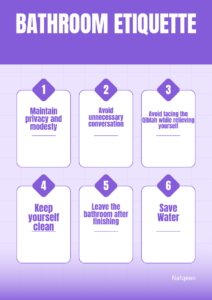
Maintain privacy and modesty
The bathroom is a private place, so a person should protect their awrah and avoid exposing themselves unnecessarily.
Avoid unnecessary conversation
There is no need to engage in casual conversation while using the toilet. The bathroom should be treated as a place for attending to one’s needs rather than socializing.
Avoid facing the Qiblah while relieving yourself
There are hadith concerning the direction of the Qiblah when urinating or defecating. For example, Abu Ayyub رضي الله عنه narrated the Prophet’s instruction not to face the Qiblah or turn one’s back toward it while answering the call of nature.
Because scholars have discussed how this ruling applies to existing bathrooms and built structures, it is better not to reduce the issue to a simplistic statement that applies identically in every circumstance.
Keep yourself clean
Islam places strong emphasis on purification and cleanliness. After using the toilet, a person should properly clean themselves and their clothing or body if necessary.
Leave the bathroom after finishing
The purpose of the bathroom is to attend to personal needs. Once finished, leave rather than remaining there unnecessarily.
Recommended: Dua for Entering and Leaving Home
Dua for Bathroom: What You Actually Need to Memorize
If you want to keep things simple, remember these two:
Before entering:
Allahumma inni a’udhu bika minal-khubuthi wal-khaba’ith.
After leaving:
Ghufranak.
The first is a supplication seeking Allah’s protection, while the second is a request for forgiveness. Both are connected to authentic reports about the Prophet ﷺ.
This makes the practice easy enough to incorporate into your daily routine without memorizing a long list of phrases.
Frequently Asked Questions(FAQ)
What is the dua before entering the bathroom?
The authentic dua is:
اللَّهُمَّ إِنِّي أَعُوذُ بِكَ مِنَ الْخُبُثِ وَالْخَبَائِثِ
Allahumma inni a’udhu bika minal-khubuthi wal-khaba’ith.
It means, “O Allah, I seek refuge in You from the khubuth and khaba’ith.” The wording is recorded in Sahih al-Bukhari 142.
What is the dua after leaving the bathroom?
The Sunnah dua after leaving is:
غُفْرَانَكَ
Ghufranak.
It means, “I seek Your forgiveness.” This is reported from Aisha رضي الله عنها in Sunan Abi Dawud 30 and Jami’ at-Tirmidhi 7.
Can I say the entering dua while I am already inside?
It is better to say it before entering, following the wording and description of the prophetic narration. Sunan Abi Dawud specifically describes the supplication in connection with entering the place of relieving oneself.
Do I have to memorize the Arabic?
Memorizing the Arabic is useful because the dua is very short, but the most important thing is to understand what you are saying and follow the established Sunnah.
You can begin with these two:
Before entering:
Allahumma inni a’udhu bika minal-khubuthi wal-khaba’ith.
After leaving:
Ghufranak.
Is “Ghufranak” authentic?
Yes. The narration in Sunan Abi Dawud 30 states that the Prophet ﷺ would say Ghufranak when he came out from the place where he relieved himself, and the hadith is graded Sahih by al-Albani.
What does “Ghufranak” mean?
Ghufranak means “I seek Your forgiveness” or “Your forgiveness, O Allah.”
The word itself is a concise request for Allah’s forgiveness.
Is there a longer dua after leaving the bathroom?
The established prophetic wording in the narration is simply:
غُفْرَانَكَ — Ghufranak.
It is better to clearly distinguish this authentic wording from longer phrases that may circulate online without the same hadith basis.
Should I say the bathroom dua every time?
The dua is connected to the Sunnah practice of entering the place where one relieves oneself. Making it part of your normal routine can help you remember the Sunnah consistently.
A Quick Bathroom Dua Guide
| Situation | Dua | Meaning |
|---|---|---|
| Before entering | Allahumma inni a’udhu bika minal-khubuthi wal-khaba’ith | O Allah, I seek refuge in You from the khubuth and khaba’ith. |
| After leaving | Ghufranak | I seek Your forgiveness. |
The first supplication is recorded in Sahih al-Bukhari 142, while the second is reported in Sunan Abi Dawud 30.
Final Takeaway
The dua for entering and leaving the bathroom is simple enough to memorize and practice every day.
Before entering, say:
اللَّهُمَّ إِنِّي أَعُوذُ بِكَ مِنَ الْخُبُثِ وَالْخَبَائِثِ
Allahumma inni a’udhu bika minal-khubuthi wal-khaba’ith.
After leaving, say:
غُفْرَانَكَ
Ghufranak.
These short supplications show how the Sunnah brings remembrance and good manners into ordinary parts of daily life. The entering dua is authentically recorded in Sahih al-Bukhari, and Ghufranak is reported in Sunan Abi Dawud and Jami’ at-Tirmidhi.
You can also continue with our guide to the dua before sleeping, another collection of authentic Sunnah supplications for an everyday routine.
Sources
- Sahih al-Bukhari 142: Supplication when entering the place of relieving oneself.
- Sahih al-Bukhari 6322: The same entering supplication in the Book of Invocations.
- Sunan Abi Dawud 30: “Ghufranak” after leaving.
- Jami’ at-Tirmidhi 7: “Ghufranak” after leaving.